

maestro carmon deleone reflects on cincinnati Jazz history
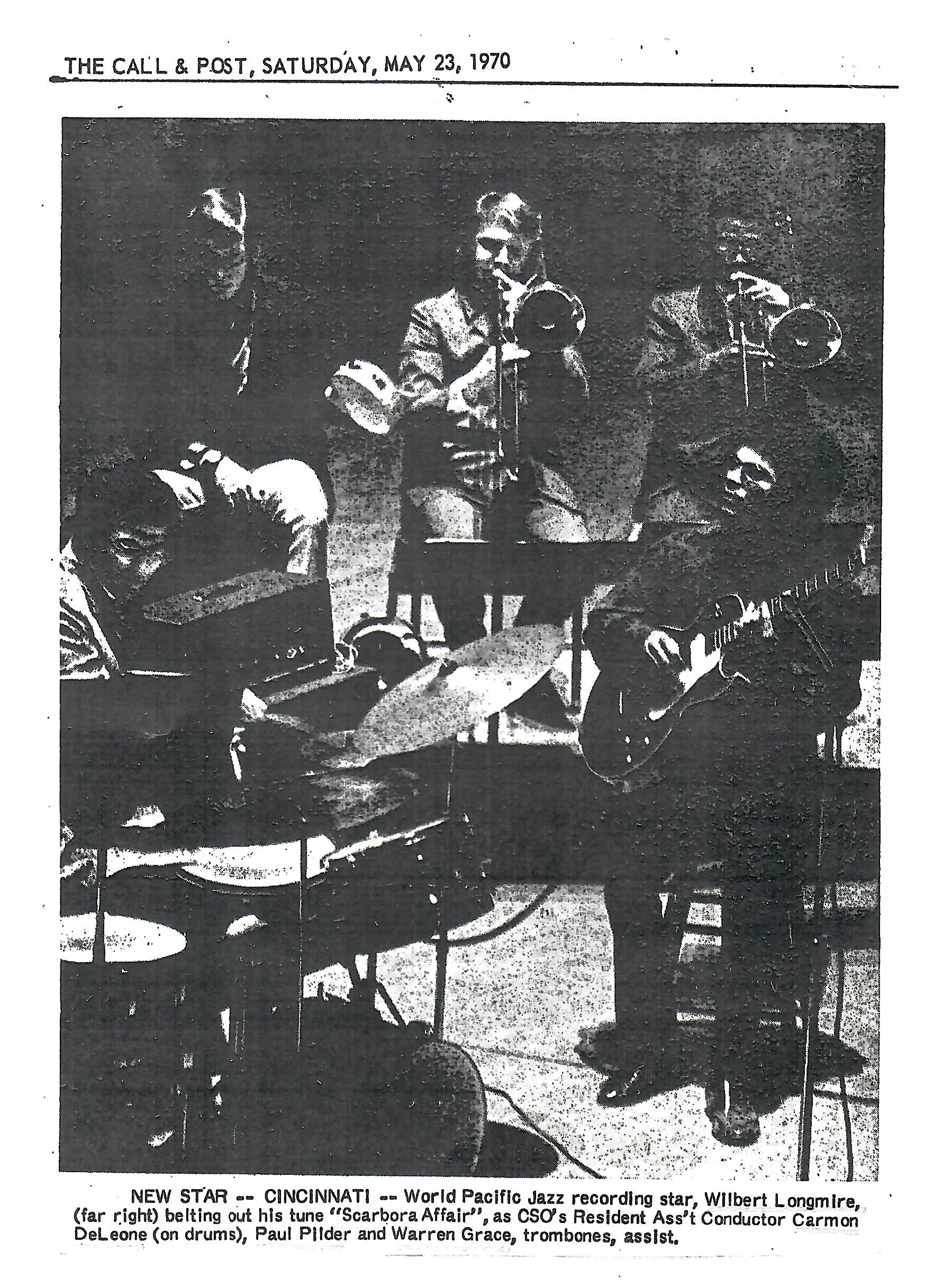
Pictured: Cincinnati Call and Post clipping from DeLeone’s May 1970 Open Door Series performance. - Provided by Carmon DeLeone.
By Mildred C. Fallen
As part of a collection of stories about the West End community, A Picture’s Worth Co-Founder and Executive Creative Director Elissa Yancey interviewed former Cincinnati Ballet Music Director Carmon DeLeone. For context, when this interview took place, the Ballet company was still located on Central Parkway in the West End, where it had been for generations. Maestro DeLeone, who was a conductor for more than 50 seasons with the CSO and has frequently conducted other orchestras throughout the United States, Canada, Australia, Puerto Rico and Europe, shared valuable history about the city’s rich jazz legacy and the people connected with it.
A significant moment from the interview was when DeLeone shared that one of his career highlights was working with late jazz singer and actor, Joe Williams. For those unfamiliar with his name, he made popular recordings with the Count Basie Orchestra, and late in his career, Williams portrayed Al Hanks, Claire [Hanks] Huxtable’s father on The Cosby Show.
In May 1970, DeLeone conducted a concert featuring Williams as part of CSO’s Open Door Series, a program created in response to social unrest to demonstrate the orchestra’s commitment to diversity.The series featured several major African American artists, including Roberta Flack, Les McCann, Hugh Masekela, and Nina Simone. DeLeone conducted the symphony on the first half of the program, with Williams as the featured vocalist. For the second half, DeLeone's own Studio Big Band took the stage, and he conducted from his drum set. Cincinnati guitarist Wilbert Longmire was featured on both halves of the program.
Here’s where it gets even more interesting— Williams, whose real name was Joseph Goreed—had familial ties to the Queen City, and possibly lived here as a child. DeLeone recalled meeting a man at the Marian Spencer street dedication who remembered Williams as a neighborhood kid, and although the man didn’t specify which neighborhood, DeLeone felt there was a possibility that it was in the West End.
After free falling down a research rabbit hole on Williams, I learned that Williams’ late wife’s family was from Cincinnati. After he and his wife divorced, she returned to the city and raised their children here. That tracks, as a Cincinnati Enquirer concert review reported that his son Joe Jr. and his daughter Joanne were in attendance at Williams’ 1970 CSO concert.
DeLeone said he ran into Joanne at the Dalton Street post office some years ago. According to DeLeone, Joanne told him she recognized his name on a parcel and remembered he worked with her father.
Although biographical accounts indicate Williams lived in Chicago, NY, and all over Europe, nothing confirmed he lived in Cincinnati. However, Lemma Goreed, his grandmother, was buried in Vine Street Cemetery in 1995. His grandson, who was born in 1981, attended Woodward High School. An obituary reported that his grandson died in 2017.
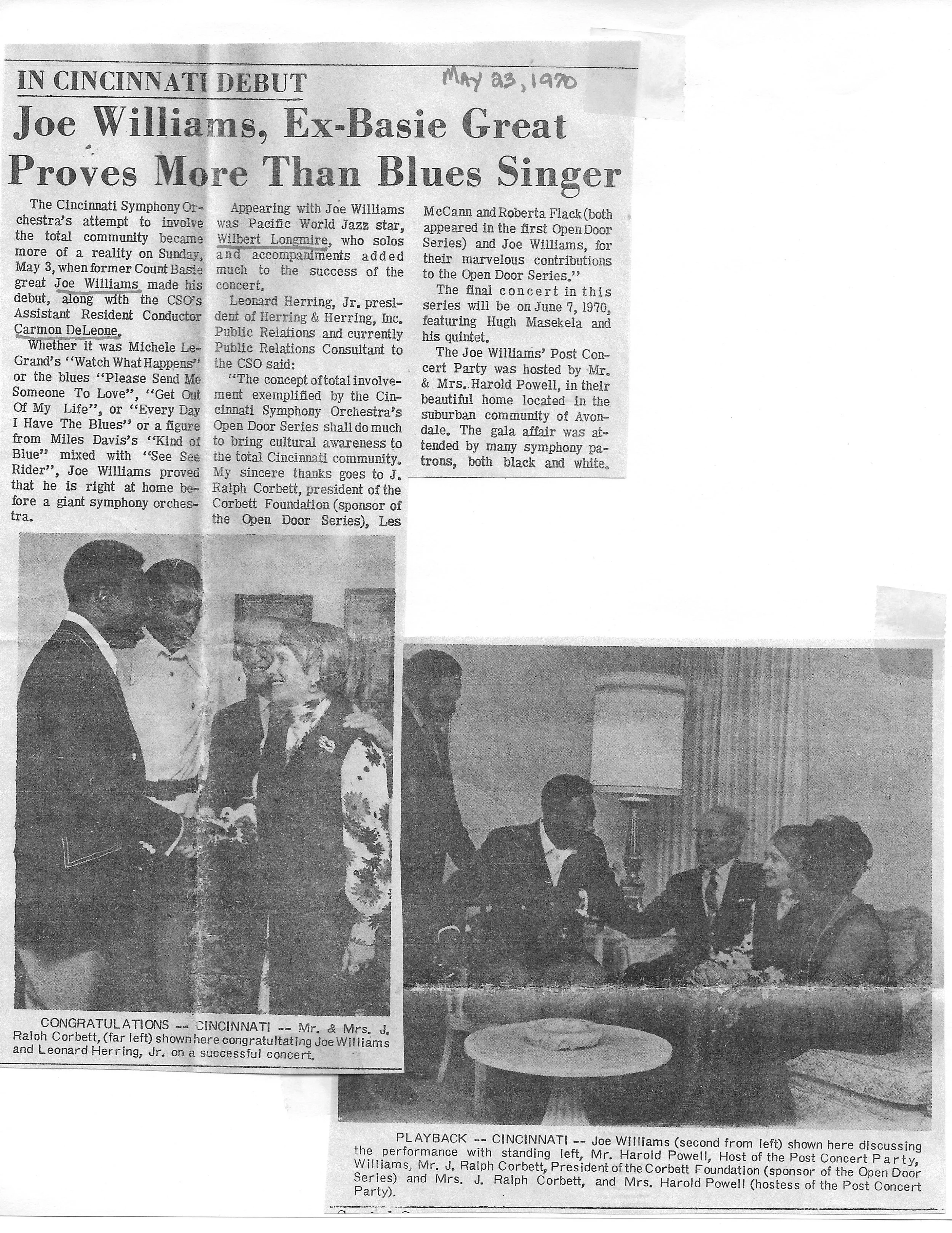
Newspaper clipping courtesy of Carmon DeLeone’s collection.
In the interview, DeLeone also mentions Leonard Herring Jr., who was responsible for promoting the Open Door Series. He says Herring was likely how tickets were sold in Black-owned businesses in the West End at the time, like Parker’s Barbershop, which was located on Linn Street.
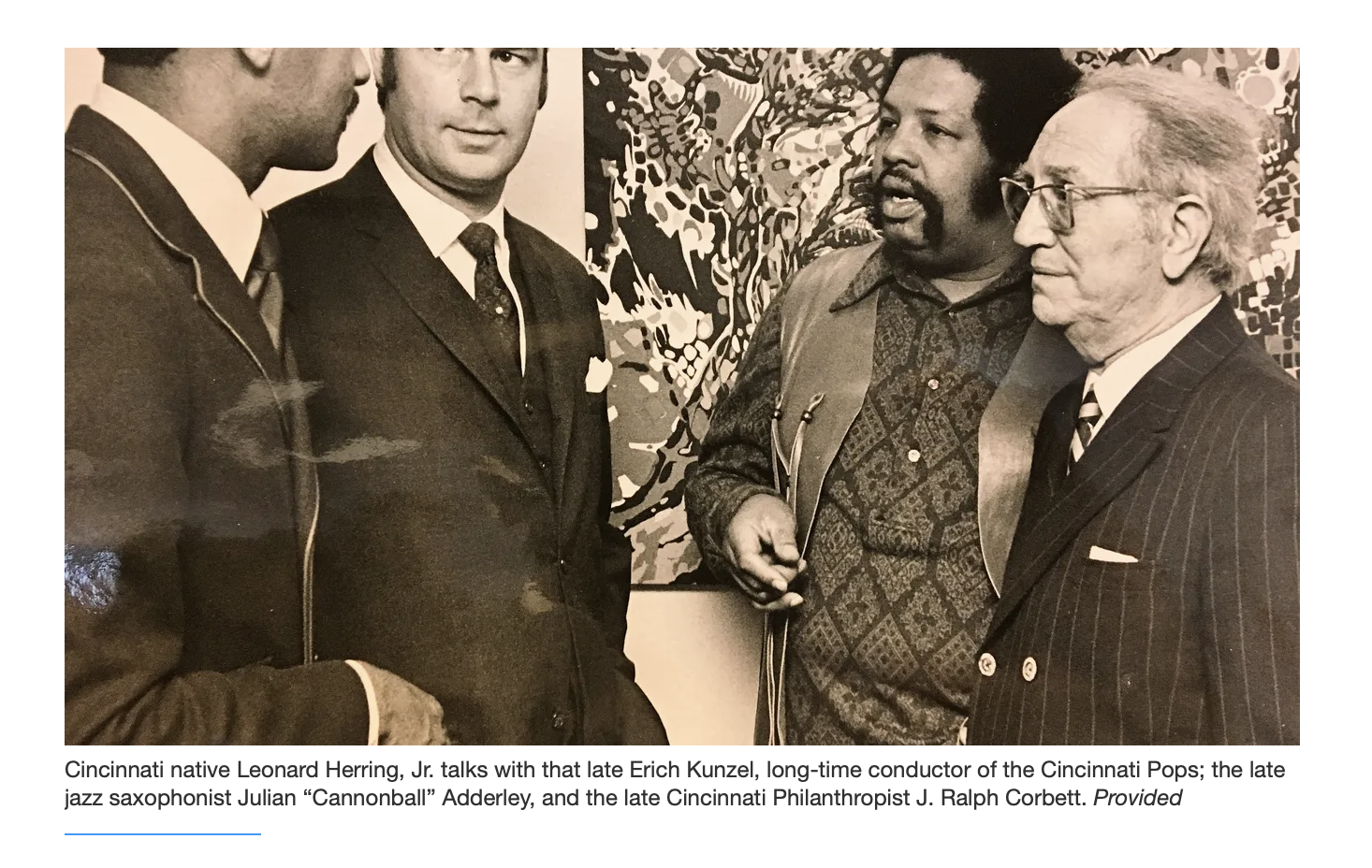
Image of Leonard Herring Jr., Erich Kunzel, Julian “Cannonball” Adderley and J. Ralph Corbett provided by Carmon DeLeone.
Listen to the full interview audio here: